Emergency awareness · Recovery
Pulmonary Embolism: Recognize, Treat, Recover
A pulmonary embolism (PE) is a sudden blockage in an artery of the lung, almost always caused by a blood clot that broke loose from a deep vein in the leg and traveled to the lung. It is a medical emergency. If you suddenly cannot catch your breath, have sharp chest pain that worsens when you breathe in, cough up blood, or feel faint with a racing heart — call 911 (or your local emergency number) right away. Quick treatment can be lifesaving. Most people are treated with blood-thinning medicines, and many recover well — but PE is serious, so it helps to know the warning signs, how it is diagnosed and treated, and what the weeks of recovery and follow-up involve. This guide walks through all three.
What a pulmonary embolism is
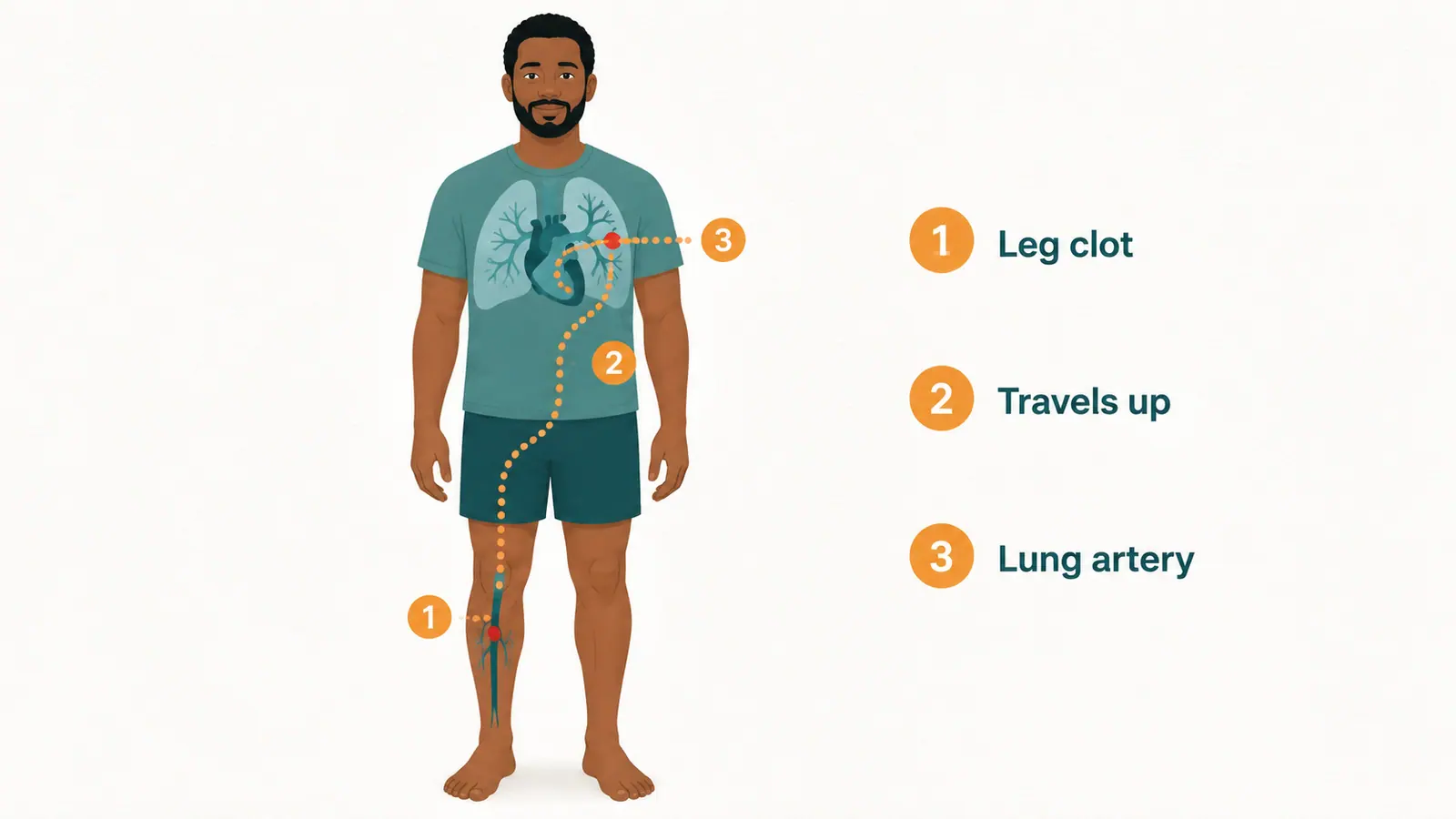
A PE is a sudden block in one of the arteries that carry blood through your lungs. MedlinePlus describes it simply as a clot lodging in a lung artery. The great majority of these clots start as a deep vein thrombosis (DVT) — a clot in a deep vein, usually in the leg — that breaks free and is carried through the heart into the lungs. Because DVT and PE are two ends of the same process, doctors group them together as venous thromboembolism (VTE).
PE is common and can be dangerous. Cleveland Clinic notes it ranks among the leading causes of cardiovascular death, and that a sizeable share of deaths happen within the first hours — often before a person reaches care. That is exactly why recognizing it early matters so much. The good news: when PE is found and treated promptly, the outlook is far better, and most people go on to recover.
1. Recognize the warning signs
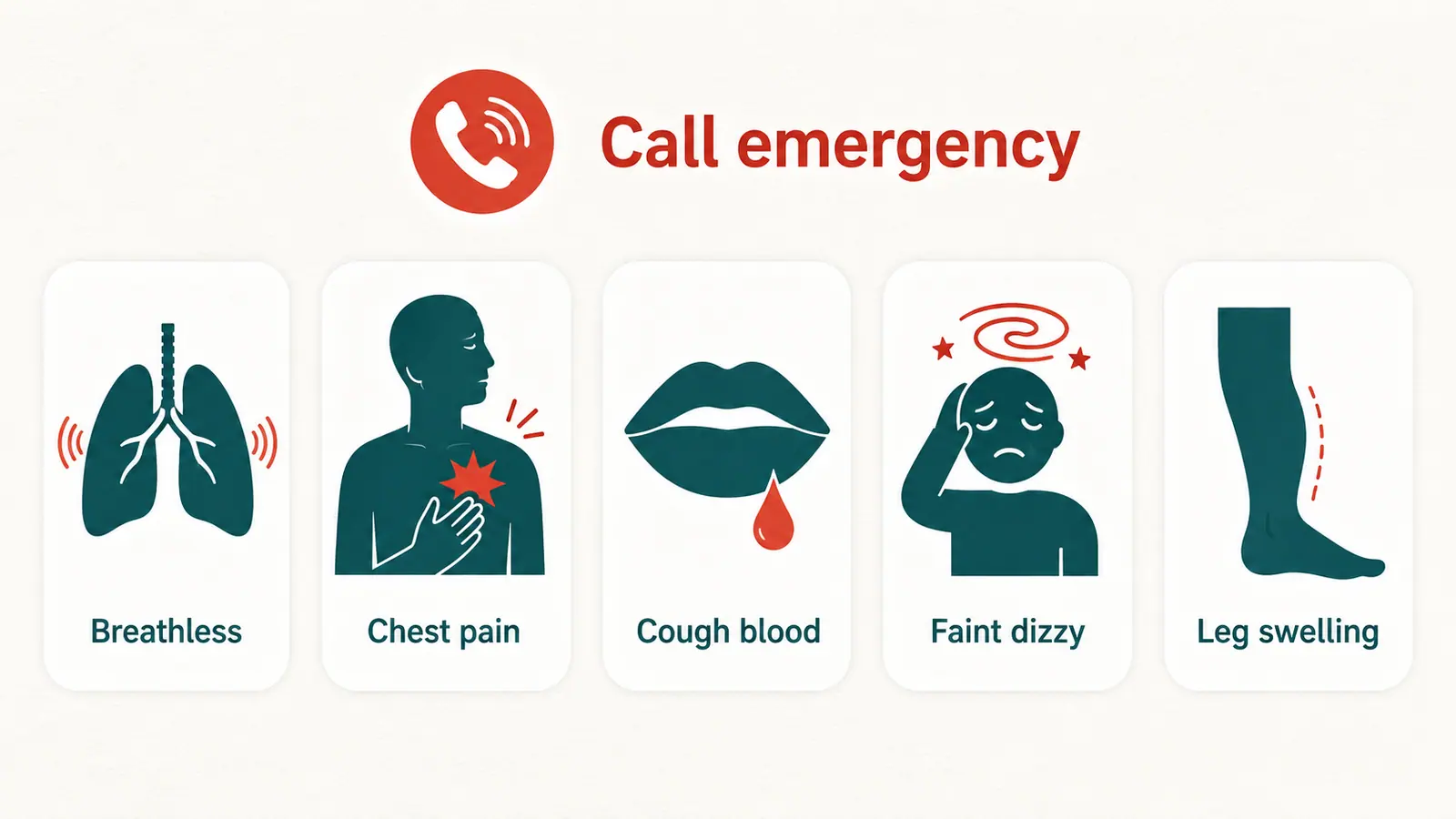
PE is sometimes called a "great mimic" because its symptoms overlap with a heart attack, pneumonia, or even a panic attack — and some people have very few symptoms at first. The signs that come up most consistently across patient-education sources such as the American Lung Association are:
- Sudden shortness of breath — often the first or only symptom, and it may come on even at rest.
- Sharp chest pain that gets worse when you breathe in or cough — it can feel like a heart attack.
- Coughing, sometimes coughing up blood (usually a small amount).
- A fast or irregular heartbeat, and lightheadedness, dizziness, or fainting from a sudden drop in blood pressure.
- Sometimes swelling, pain, redness, or warmth in one leg — a sign of the DVT that caused it.
One important note: the "classic triad" of breathlessness, chest pain, and coughing up blood all together is actually uncommon — it appears in only a minority of cases. So you should not wait for the full picture. If breathlessness, chest pain, or fainting come on suddenly and you can't explain them, treat it as an emergency and call 911.
2. How doctors diagnose PE
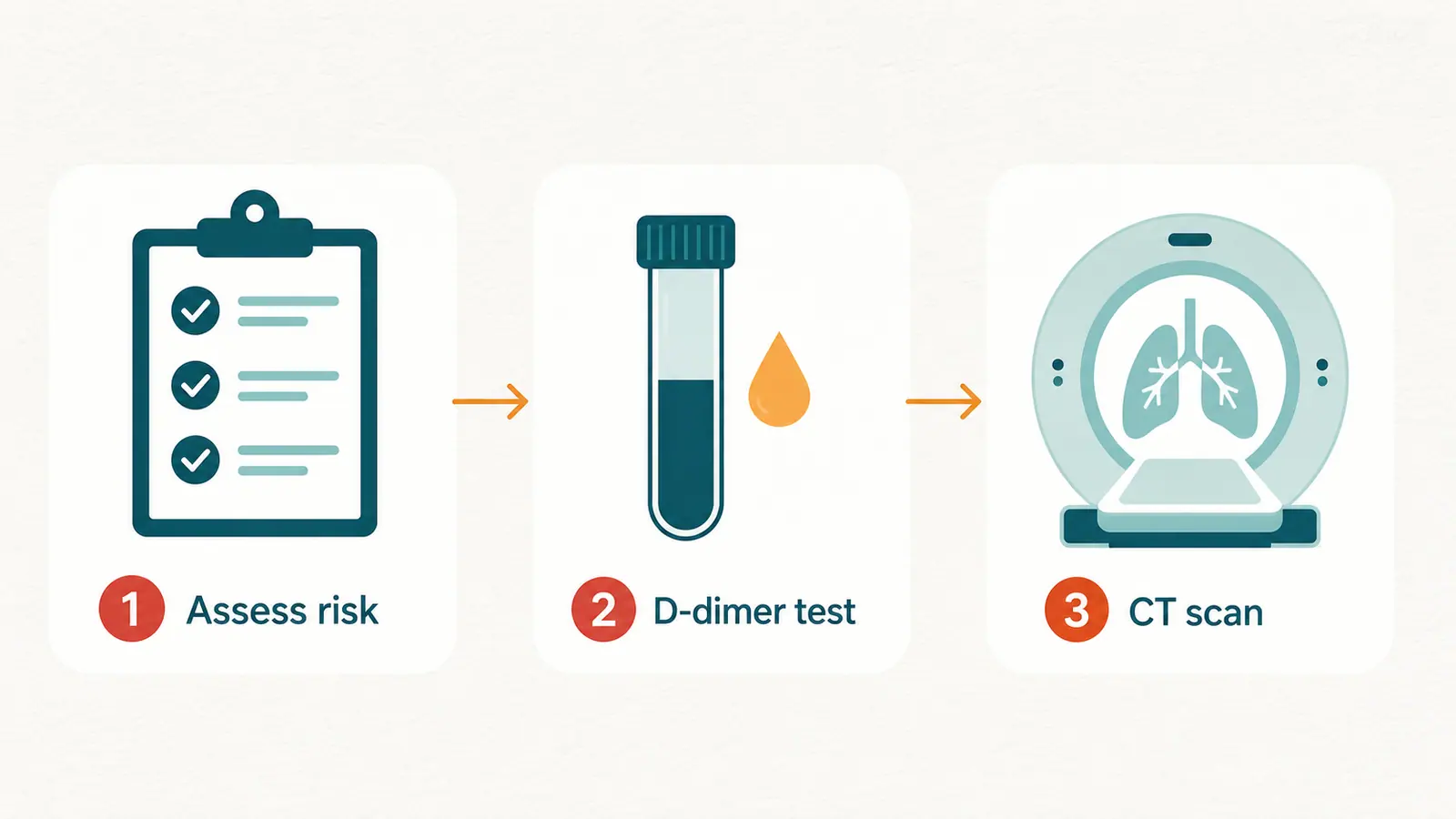
Because the symptoms are nonspecific, doctors don't diagnose PE on symptoms alone. They follow a stepwise process that pairs a clinical assessment with targeted tests:
- Clinical assessment. The team reviews your symptoms and risk factors and often uses a scoring tool to estimate how likely a clot is before any imaging.
- D-dimer blood test. This measures a substance released when clots break down. A normal result in a lower-risk person helps rule PE out; a raised result is not proof on its own and points toward imaging.
- CT pulmonary angiography (CTPA). A specialized CT scan with contrast dye that shows the lung arteries directly — the most common test used to confirm PE.
- Other tests as needed — a ventilation/perfusion (V/Q) lung scan when CT isn't suitable, an ultrasound of the legs to look for the source DVT, and an echocardiogram to check whether the strain has affected the right side of the heart.
This staged approach avoids both missing a clot and over-testing. If you are very unstable, the team may use a bedside ultrasound of the heart to act quickly rather than waiting for a scan.
3. How PE is treated
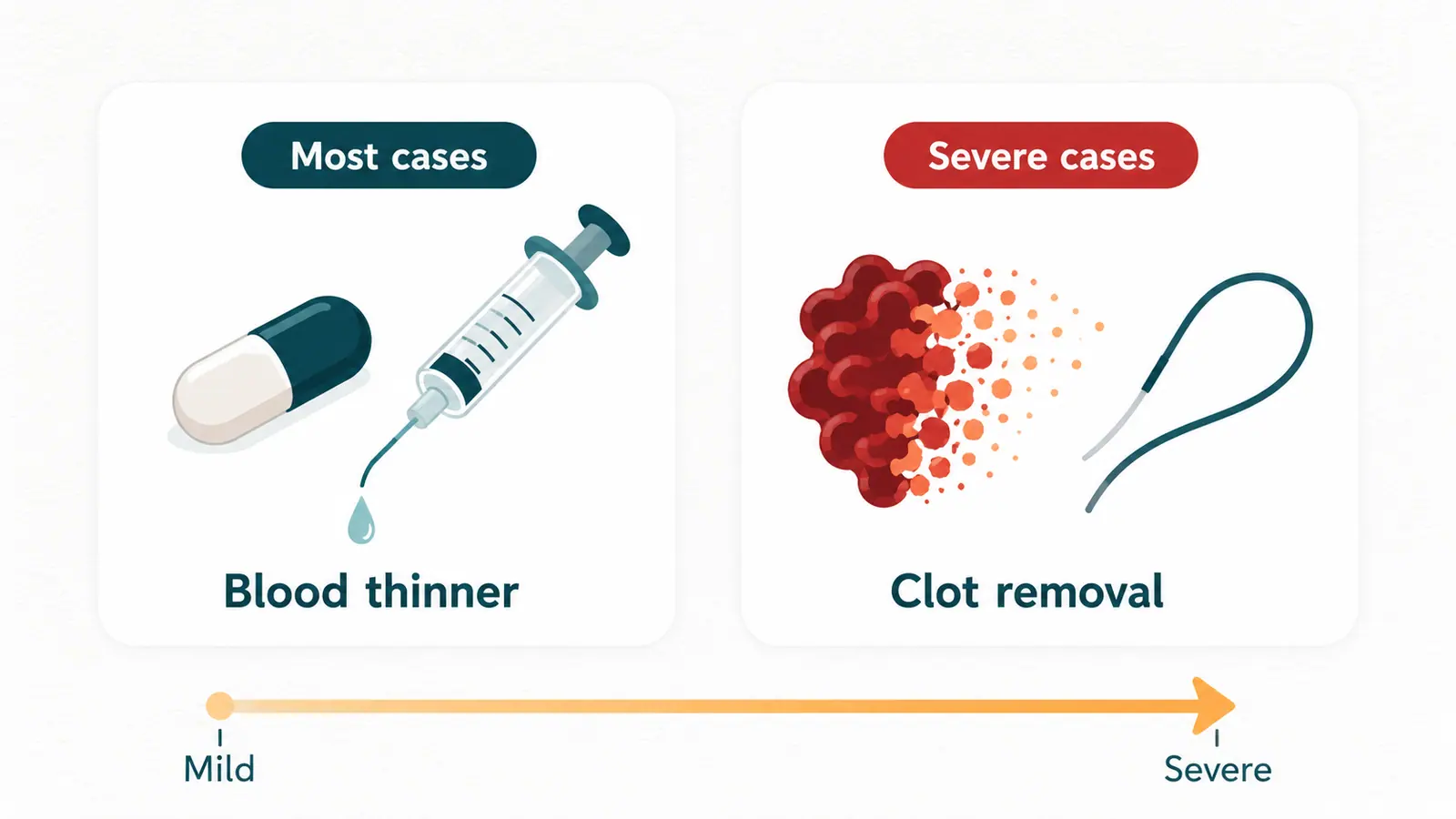
The goals of treatment are to stop the clot from growing, prevent new clots, and — in severe cases — break up a clot that is straining the heart. Treatment is matched to how sick you are, and MedlinePlus groups the main options as medicines and procedures:
- Anticoagulants ("blood thinners") are the mainstay for most people. They do not dissolve the existing clot directly; they stop it from getting bigger and prevent new ones while your body reabsorbs it over time. They may be given as a pill, an injection, or through an IV.
- Thrombolytics ("clot busters") are powerful drugs that actively dissolve a large, dangerous clot. Because they carry a higher bleeding risk, they're reserved for severe, high-risk PE where the heart is under serious strain.
- Catheter-based procedures and surgery. For unstable patients, a specialist may thread a catheter to the clot to deliver medicine or remove it, or — rarely — perform surgical removal.
- An IVC filter. If blood thinners can't be used (for example, because of active bleeding), a small filter may be placed in the body's main lower vein to catch clots before they reach the lungs.
Many hospitals now coordinate complex cases through a multidisciplinary "PE response team" so that the right treatment is chosen quickly. Which option is right is an individual decision — always made with your care team.
4. Recovery, follow-up, and preventing another clot
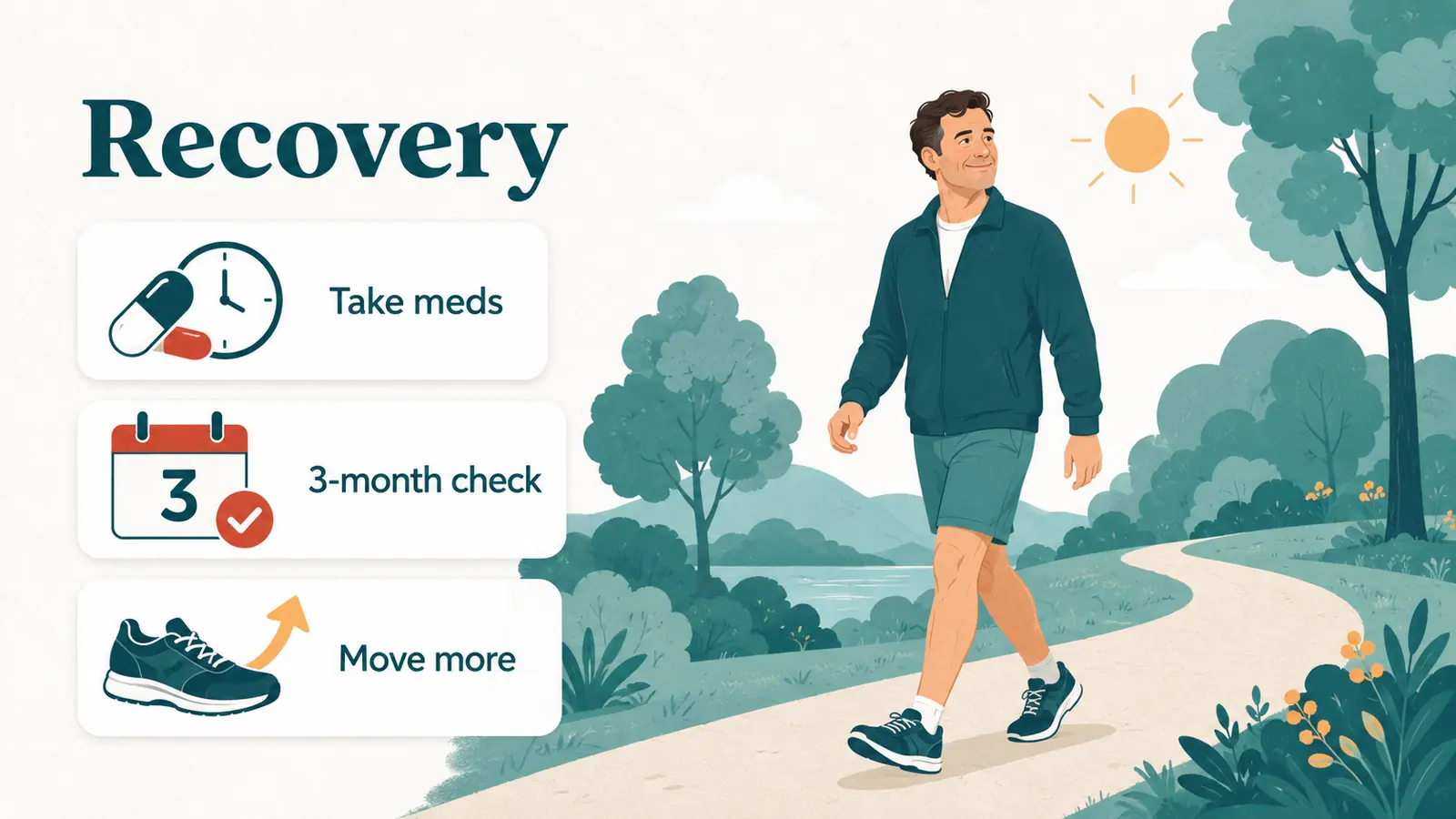
Recovery from PE is usually gradual, measured in weeks to months rather than days. Most people continue a blood thinner for at least about 3 months, and many are reassessed around that point to decide whether to stop or continue — a milestone highlighted in the ACC follow-up guidance. How long you stay on treatment depends on what caused the clot: a clot triggered by a temporary cause (like surgery) is often treated for a defined course, while an unprovoked or recurrent clot may need longer or indefinite treatment. Never stop a blood thinner on your own — stopping early is a common cause of a repeat clot.
During recovery, a few things help:
- Take your anticoagulant exactly as prescribed, at the same time each day, and ask before starting any new medicine, supplement, or over-the-counter painkiller — some interact with blood thinners.
- Ease back into activity in a stepwise way. Gentle walking early on supports recovery; your team can advise when to add more. Lingering breathlessness or low exercise tolerance is common at first and usually improves.
- Keep your follow-up appointments. They check that you're recovering and watch for less common longer-term issues such as post-PE syndrome (ongoing breathlessness and reduced fitness) and, rarely, chronic thromboembolic pulmonary hypertension (CTEPH) — high pressure in the lung arteries that needs specialist care.
- Lower your risk of a future clot: stay active, move and stretch your legs on long trips or bed rest, stay hydrated, and tell any future doctor or surgeon about your PE history.
When to seek help during recovery
Even on treatment, call your care team promptly — or seek emergency care — if you notice:
- New or worsening shortness of breath, chest pain, fainting, or coughing up blood — these can signal a new or larger clot. Treat as an emergency and call 911.
- New swelling, pain, redness, or warmth in a leg — a possible new DVT.
- Signs of bleeding from your blood thinner: unusual bruising, blood in urine or stool, black or tarry stools, prolonged bleeding from a small cut, a severe or sudden headache, or any heavy bleeding. Seek urgent care for severe bleeding.
The bottom line
A pulmonary embolism is serious, but it is treatable — and recognizing it early is the single most powerful thing you can do. Learn the sudden warning signs and don't wait them out. Once treated, recovery is a steady process: take your medicine as prescribed, return for your reviews, rebuild activity gradually, and work with your team to prevent the next clot. When something feels suddenly wrong with your breathing or chest, trust that instinct and get help.
This article is for health education only and does not replace individualized advice from your physician, nurse, or care team. Follow your own care team when instructions differ.