Home nursing care
PICC Line Home Care: A Complete Guide for Patients and Caregivers
Caring for a PICC line at home comes down to four habits: keep the dressing clean and dry, flush the line exactly as your nurse showed you, watch the insertion site every day, and call your care team the moment something looks or feels wrong. A PICC (peripherally inserted central catheter) is a thin tube that runs from a vein in your upper arm to a large vein near your heart, and it can stay in for weeks or months. Most home care is simple and routine — but because the catheter reaches a central vein, small lapses can lead to infection or a blockage. This guide explains each habit, and the warning signs that mean "call now."
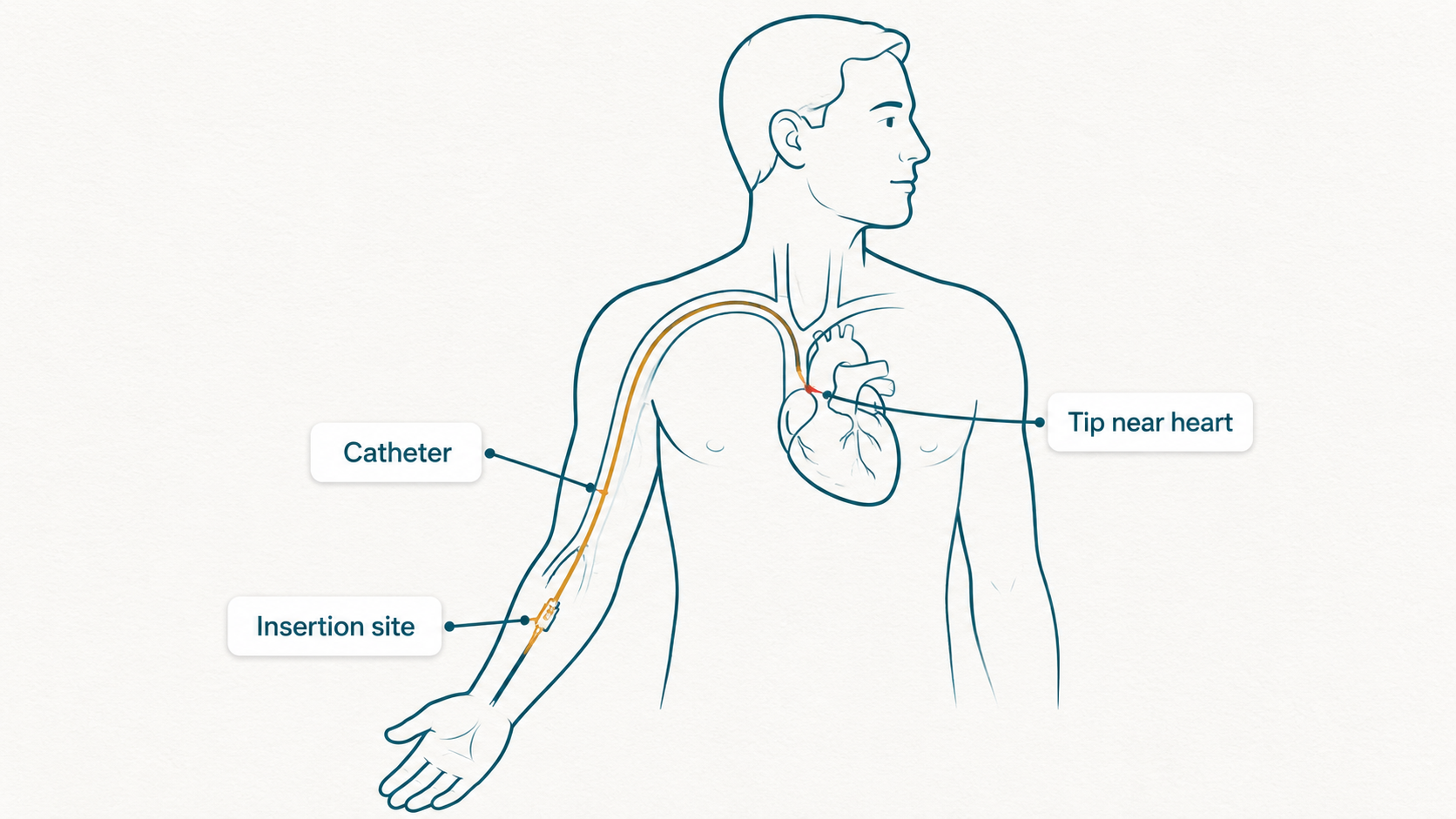
What a PICC line is — and why home care matters
A PICC is a long, flexible catheter placed through a vein in your upper arm; its tip ends in a large central vein just above the heart. MedlinePlus describes it as a route for delivering medicines, IV nutrition, or fluids, and it can also be used to draw blood for tests. Because it can stay in place for the length of a treatment course — often several weeks — much of its day-to-day care happens at home, by you or a caregiver.
The reason careful technique matters is the catheter's destination. It opens directly into central circulation, so a germ that gets in at the skin or the cap can travel to the bloodstream. Infection-prevention research is consistent on one point: bloodstream infections linked to these lines are driven more by everyday maintenance — dressings, hub access, flushing — than by how the line was first placed. In other words, the routine you follow at home is the front line of prevention.
1. Keep the dressing clean, dry, and intact
The dressing is a sterile barrier that blocks germs and keeps the exit site clean. A transparent dressing is usually changed about once a week by a trained nurse, and sooner if it becomes loose, wet, soiled, or has blood or fluid underneath — guidance shared by both MedlinePlus and hospital patient-education materials. Many dressings include a chlorhexidine (CHG) pad or gel at the site, which the CDC recommends to lower infection risk.
Between changes, your job is to protect it:
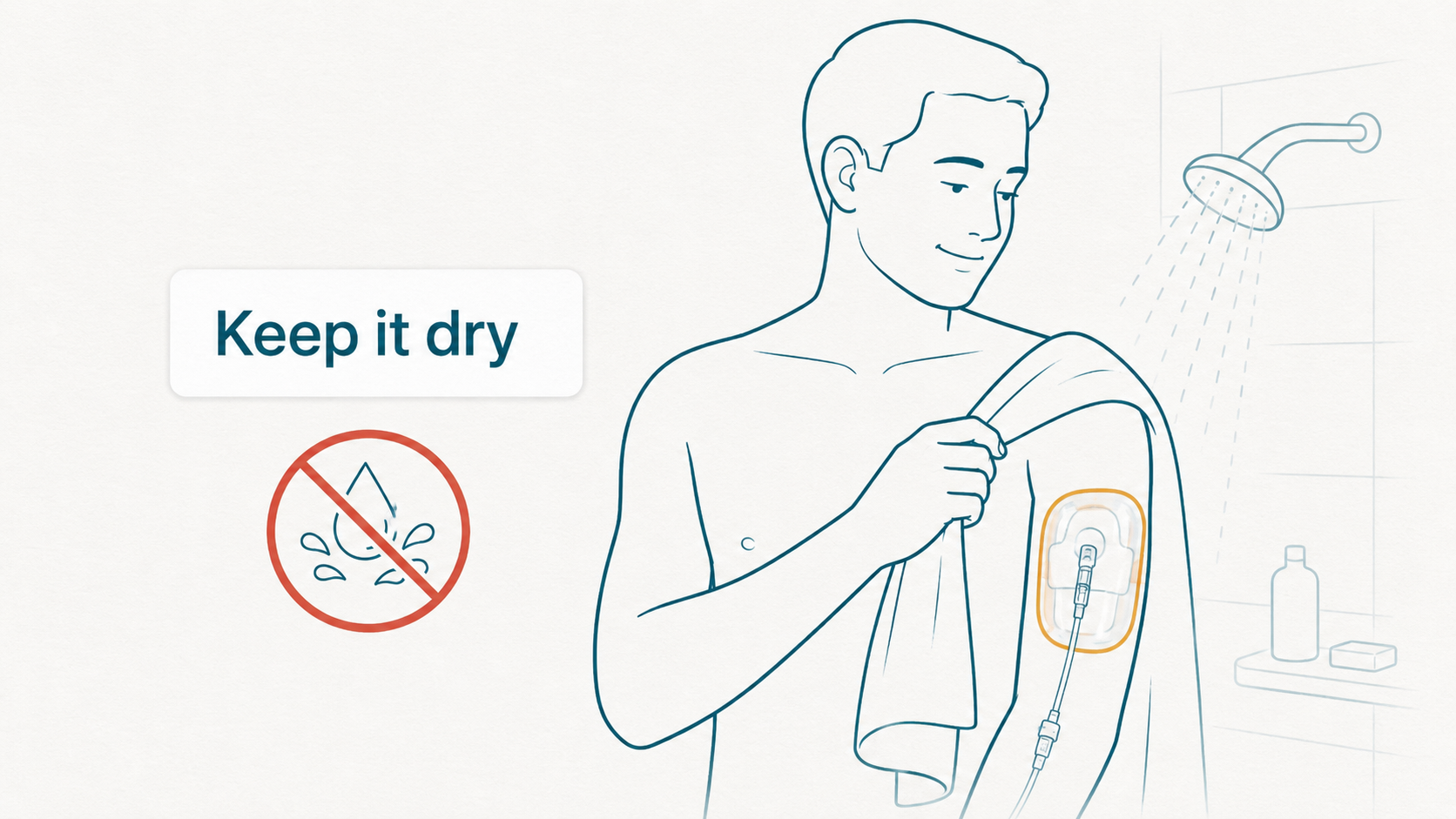
- Keep the dressing and the arm dry. Cover the site with a waterproof barrier before showering, and don't submerge the arm in a bath, pool, or hot tub.
- Don't pull, tug, or let the catheter dangle. Tight-ish sleeves or a mesh sleeve help keep it secure; a securement device (such as a StatLock or SecurAcath) holds it in place without stitches.
- Check the edges daily. If the film lifts, gets wet, or you see redness or fluid underneath, don't wait for the weekly change — call your homecare nurse.
2. Flush the line correctly
Flushing keeps the catheter clear so it doesn't clot between uses. Three rules carry most of the safety, and they're echoed across hospital protocols including UCLA Health:
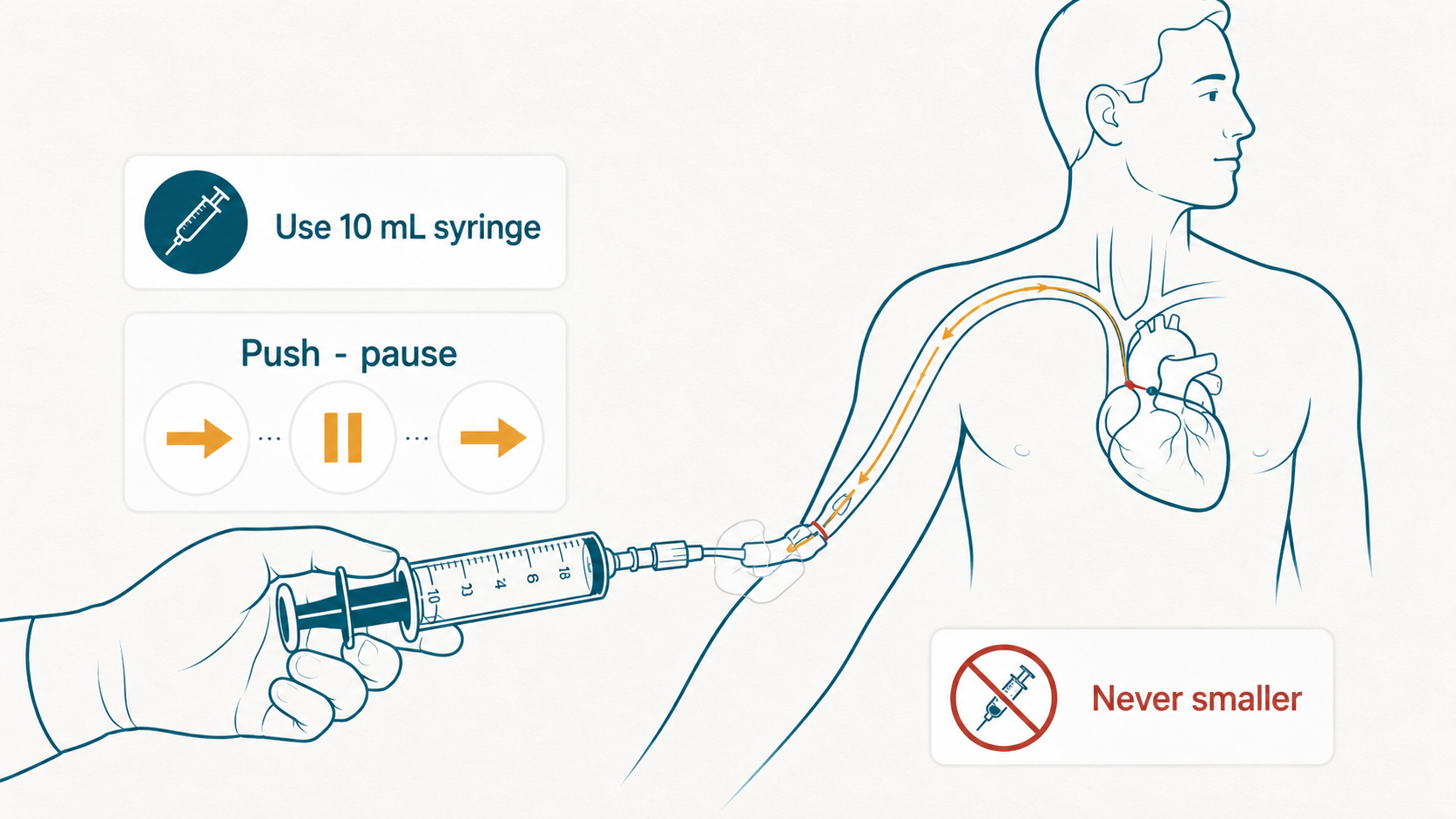
- Use a 10 mL syringe or larger — never a smaller one. Small syringes generate high pressure that can rupture the catheter, even when the volume you're giving is under 10 mL.
- Use the "push-pause" technique. Push a little saline, pause, push a little more — the gentle turbulence helps sweep the inside of the catheter clean rather than letting deposits settle.
- Follow the exact solution, strength, and schedule your team prescribed. Many lines are flushed with saline before and after each use, and some are then "locked" with heparin; valved catheters (such as a Groshong) may need saline only. The right answer is the one written on your specific orders — heparin strength in particular is prescribed individually.
A practical detail from patient-education guides: before flushing, clean the cap by scrubbing it with an alcohol pad for about 15 seconds and let it air-dry for about 15 seconds. Don't blow or fan on it to speed drying — that re-introduces germs. And if you ever meet firm resistance and the line won't flush, stop and call your team rather than forcing it.
3. Check the site every day
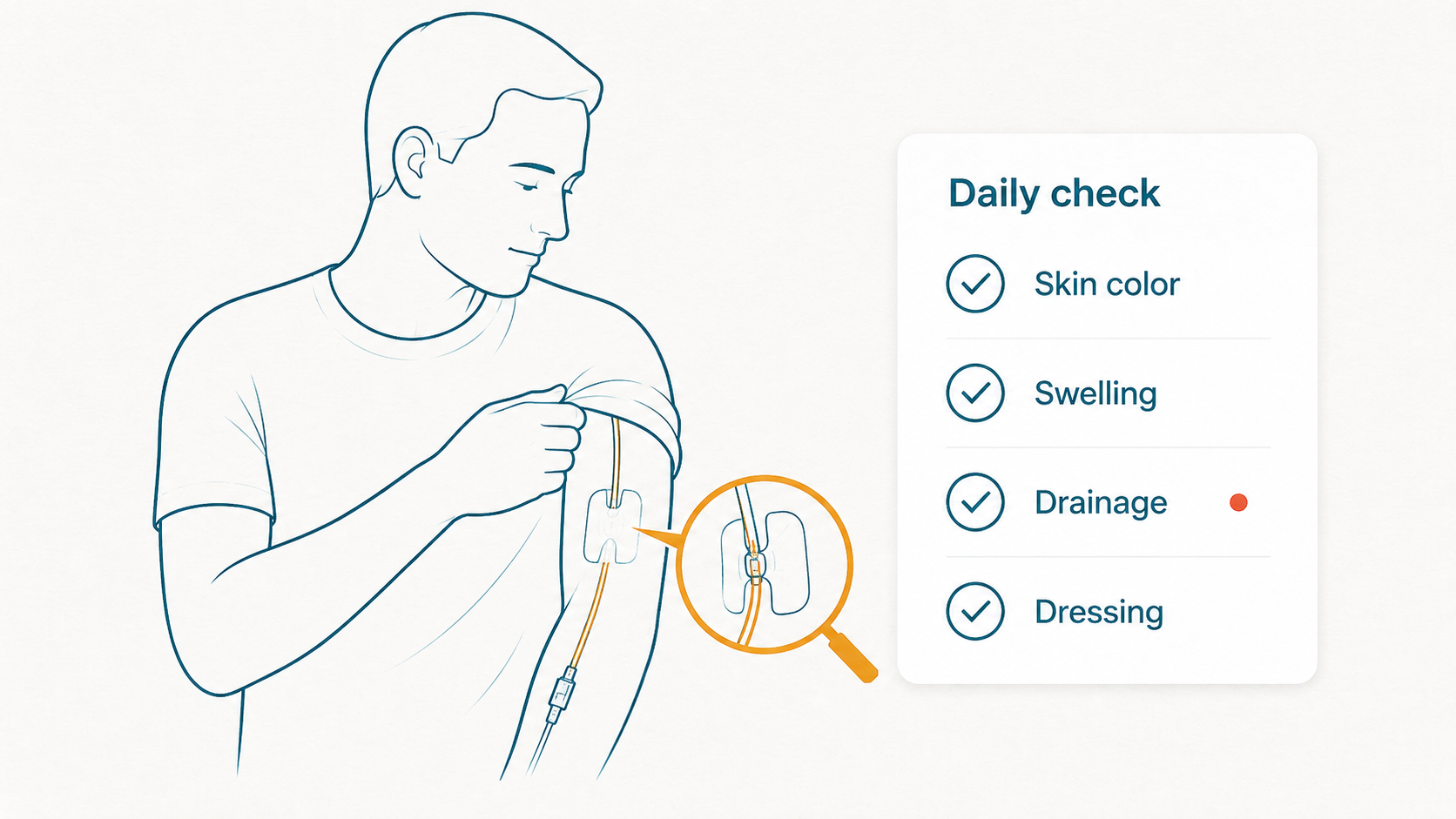
A daily look takes a minute and catches problems early. Each day, glance at the exit site and along the arm and ask:
- Is the skin around the site a normal color, or is it red, warm, swollen, or tender?
- Is there any fluid, blood, or pus leaking from the site, or a bad smell?
- Does the dressing still look clean, dry, and well-stuck?
- Does the arm feel normal, or is there new swelling, pain, or a hard, cord-like feeling along the vein?
Some mild redness at the insertion site is common in the first days and often settles. What you're watching for is redness or swelling that is new, spreading, or worsening — that's the difference between "keep an eye on it" and "call today."
When to call your care team
Knowing the warning signs is the single most important part of home care. The list below reflects guidance from cancer-center and children's-hospital patient resources such as St. Jude (Together) and CHOP.
Call promptly if you notice signs of infection
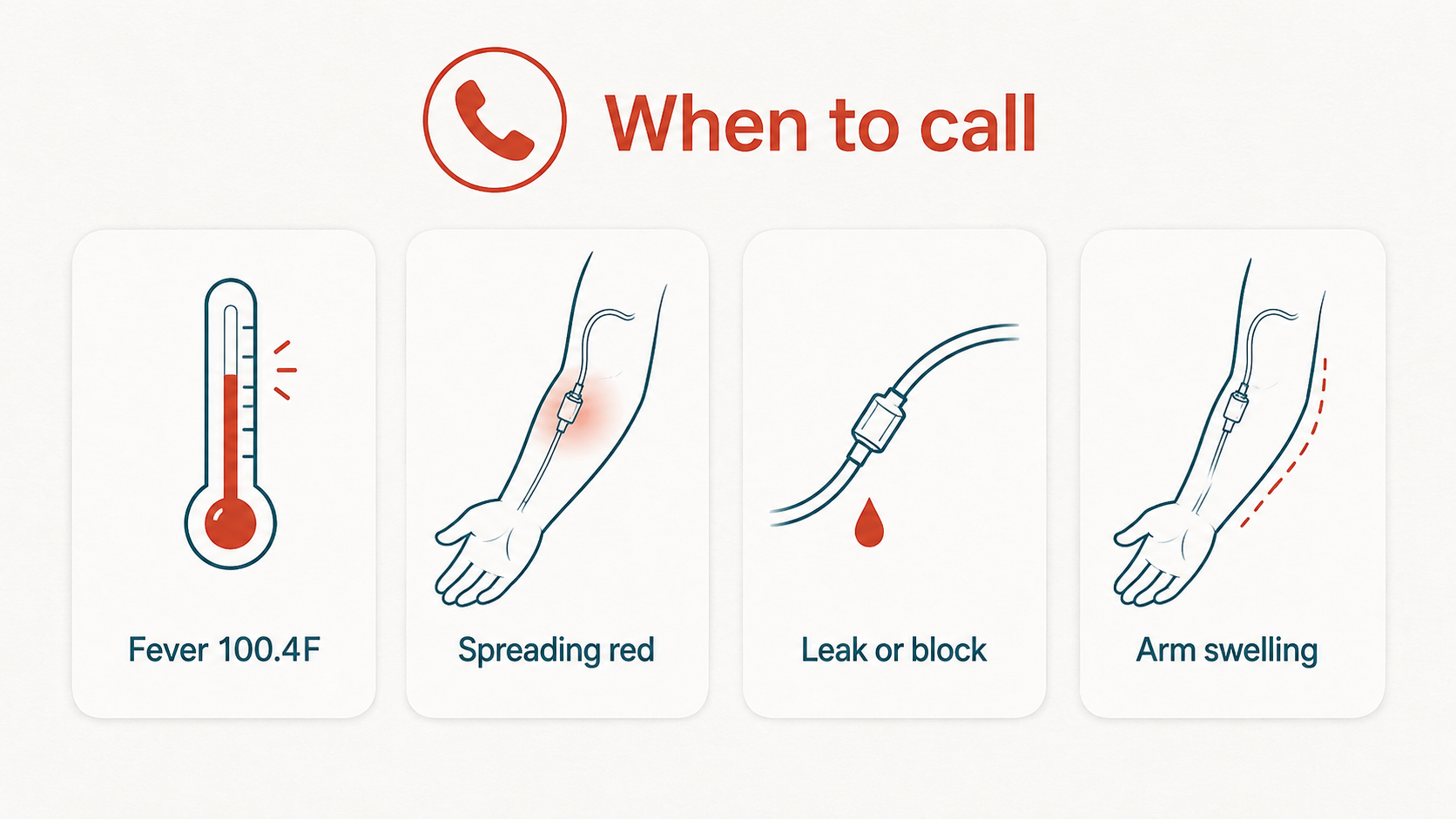
- Fever of 100.4 °F (38 °C) or higher, chills, or shaking — a key sign that infection may have reached the bloodstream (a CLABSI).
- Spreading redness, warmth, swelling, pain, or tenderness at the site or up the arm.
- Pus, drainage, or a foul smell at the exit site.
Call right away for a line problem
- The line won't flush, is blocked, or leaks fluid anywhere along the tubing.
- You see a break, crack, or bulge in the catheter — clamp the catheter above the break, cover it with sterile gauze, and call immediately. Never cut the catheter.
- The catheter looks longer or has come out, partly or fully. Don't use it; cover the site with sterile gauze and pressure and call your team. If it has fully come out, save the catheter to show them.
- New swelling in the arm, shoulder, neck, or chest on the catheter side, which can signal a clot.
Seek emergency care for chest pain, shortness of breath, a fast heartbeat, dizziness, or confusion alongside any of the above.
A few everyday precautions
- Hand hygiene first, every time. Wash with soap and water for about 20 seconds, or use an alcohol-based hand rub, before and after touching the line — the simplest and most effective infection-prevention step.
- Protect the catheter arm. Avoid blood draws, IV sticks, and blood-pressure cuffs on that arm; gentle daily use of the arm is usually fine, but skip heavy lifting and ask your team what activity is okay.
- Set up a clean workspace for flushing or any care: a well-lit, draft-free surface away from where food is prepared, wiped down before you start.
- Keep your supplies and your team's number together so a problem at night doesn't become a scramble.
The bottom line
A PICC line lets important treatment continue in the comfort of home. The care it asks of you is modest and repeatable: dry dressing, correct flushing, a daily look, and a low threshold to call. Trust that instinct — your care team would far rather hear from you about a small concern early than treat a bigger problem late. When in doubt, call.
This article is for health education only and does not replace individualized advice from your physician, nurse, or infusion team. Follow your own care team when instructions differ.